Single-Sided vs. Double-Sided Banner Stands: Which Do You Need?
Share
When you're shopping for a retractable banner stand, one of the decisions you'll run into is whether to go single-sided or double-sided. It sounds simple, but the right choice depends on your booth layout, traffic flow, and how you plan to use the display. Here's everything you need to know to make the right call.
What Is a Single-Sided Banner Stand?
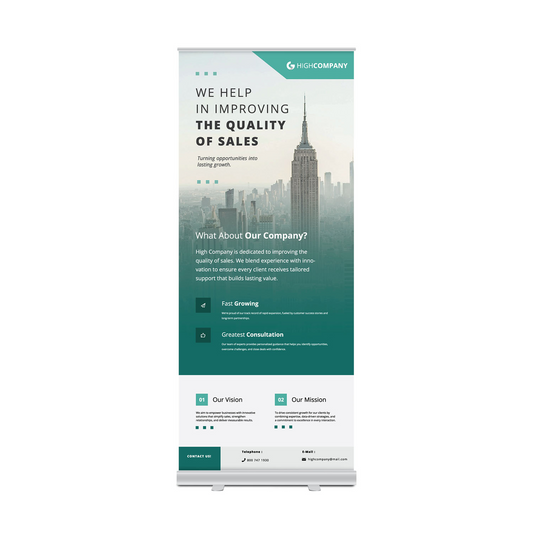
A single-sided banner stand has one printed graphic that faces one direction. It's the standard configuration — the graphic rolls up into the base, extends upward on a support pole, and faces forward. Viewers on the back or sides of the stand see the base hardware, not a graphic.
Single-sided stands are the most common type and the right choice for the majority of trade show setups. They're lighter, slightly more compact, and more affordable than double-sided options.
What Is a Double-Sided Banner Stand?
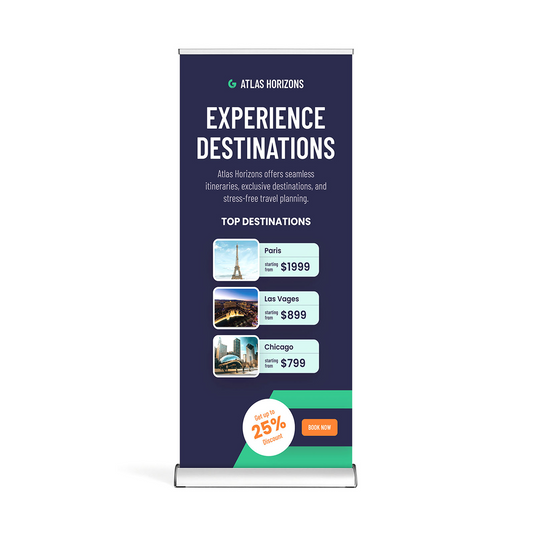
A double-sided banner stand has two printed graphics — one on each side of the display. Both graphics are visible simultaneously, so viewers approaching from either direction see a branded message. The two graphics can be identical or completely different depending on your needs.
Double-sided stands are slightly heavier than single-sided versions due to the dual graphic mechanism, but they pack down to a similar footprint and set up in the same amount of time.
When Does a Double-Sided Banner Stand Make Sense?
A double-sided banner stand earns its value in specific situations. Here's when it's worth the upgrade:
Corner Booths
If you have a corner booth, attendees approach from two different directions — the main aisle and the cross aisle. A double-sided stand placed at the corner faces both directions simultaneously, giving you branding visibility from two aisles with a single display. This is the most common and most effective use case for double-sided stands.
High-Traffic Aisles
In a busy trade show environment, people flow past your booth from both directions. A double-sided stand placed at the front of your booth ensures your message is visible to traffic moving in either direction along the aisle — not just the people approaching head-on.
Freestanding Displays Outside Your Booth
Some exhibitors place a banner stand in the aisle near their booth or at a venue entrance to direct traffic. A freestanding display in a high-traffic location benefits significantly from double-sided graphics since it's visible from both directions.
Events Where You Need Two Different Messages
Double-sided stands can carry two completely different graphics. This is useful if you want to display different products, promotions, or messages depending on which side of the booth the viewer is coming from — or if you're sharing a display between two different purposes at the same event.
When Is a Single-Sided Banner Stand the Better Choice?
Single-sided stands are the right choice in most situations:
- Inline booths with a back wall: If your banner stand is positioned against the back wall of your booth or against any wall, the back of the stand is never visible to attendees. A double-sided stand adds cost and weight with no benefit.
- Side accent displays: Banner stands used on the side edges of a booth typically face one direction. Single-sided is sufficient.
- Budget-conscious setups: Single-sided stands cost less. If your booth layout doesn't require two-sided visibility, save the budget for other display elements.
- Lightweight travel requirements: If you're flying to events and managing every ounce of luggage, single-sided stands are the lighter option.
Can the Two Graphics Be Different?
Yes. On a double-sided banner stand, the two graphics can be identical or completely different. Common approaches include:
- Same graphic on both sides: Consistent brand messaging from both directions. The simplest and most common approach.
- Different graphics on each side: One side promotes a product, the other promotes a service. Or one side has your general brand message, the other has a specific call to action or offer. This approach works well when the two sides of your stand face genuinely different audiences.
Size and Weight Considerations
Double-sided banner stands are slightly heavier than their single-sided counterparts due to the dual graphic mechanism in the base. In practice, the weight difference is modest — but if you're regularly traveling with your displays, it's worth factoring in.
Both single-sided and double-sided stands come with carry bags and pack to a similar footprint. Setup time is essentially the same — the double-sided mechanism doesn't add meaningful complexity to assembly.
The Bottom Line: Which Should You Buy?
Here's a simple decision guide:
- Your stand goes against a wall or backdrop: Single-sided. The back is never visible.
- You have a corner booth: Double-sided. Maximum visibility from both aisles.
- Your stand is freestanding in a high-traffic area: Double-sided. Both directions matter.
- You're on a tight budget: Single-sided. Save the difference for stronger graphics or additional displays.
- You want two different messages in one stand: Double-sided. The most versatile option for complex messaging needs.
Frequently Asked Questions
Are double-sided banner stands harder to set up?
No. Double-sided banner stands set up in essentially the same amount of time as single-sided stands. The dual graphic mechanism is built into the base — you extend the support pole, attach it to both graphics at the top, and the display is ready. No tools required.
Can I use two completely different graphics on a double-sided stand?
Yes. Both graphics are independent. You can use the same design on both sides for consistent branding, or use two completely different designs if you want to deliver different messages depending on the viewer's direction of approach.
Is a double-sided banner stand significantly heavier?
Slightly, but not dramatically. The base mechanism for a double-sided stand is a bit heavier than a single-sided base due to the dual graphic housing. For most exhibitors driving to events, this is a non-issue. If you're flying and managing luggage weight carefully, it's worth noting.
Do both sides of a double-sided stand have to be the same size?
Yes — both graphic panels are the same dimensions since they share the same base and support pole mechanism. You can't mix a wide graphic on one side with a narrow graphic on the other.
What's the most popular size for a double-sided banner stand?
The 33x80" size is the most versatile and most commonly ordered double-sided banner stand. It's wide enough to make a strong visual statement from both directions without taking up excessive booth space.
How do I know if my booth is a corner booth?
A corner booth has open space on two adjacent sides rather than just the front. You'll know when you register for the show — corner booths are typically marked on the floor plan and often cost slightly more than inline booths. If you're not sure, ask the event organizer.
Shop GoVizly Banner Stands
All GoVizly banner stands are printed in the USA with fast turnaround, rush production available, and a free file check on every order.
33x80 Double-Sided Retractable Banner Stand
Two graphics in one stand — the go-to choice for corner booths and high-traffic aisle placements. Most popular double-sided size.
33x80 Standard Retractable Banner Stand
The industry standard single-sided stand. Versatile, lightweight, and right for most booth setups.
33x80 Deluxe Retractable Banner Stand
Single-sided with a more robust build — ideal for frequent exhibitors who want long-term durability.
48x80 Pro Retractable Banner Stand
Extra-wide single-sided stand for maximum visual impact as a statement piece or backdrop alternative.
Browse All Banner Stands
Compare all sizes and configurations side by side.